One of the most valuable skills in carp fishing has nothing to do with gear or rigs. Learning how to read the water for carp is often far more important than choosing the perfect bait or tackle. In fact, it should be your first step when you are looking for a spot to fish
Carp are constantly moving in search of food, comfort, and safety. Anglers who learn to recognize the signs of carp activity can dramatically improve their chances of success. Even a simple adjustment in casting location can turn a quiet session into steady action.
Bank anglers in particular benefit from this skill because they cannot rely on boats or electronics. Reading the water allows you to use observation and basic knowledge of carp behavior to identify productive areas.
Understanding Carp Behavior
Carp rarely roam randomly. Like most fish, they follow patterns that relate to feeding opportunities, water temperature, oxygen levels, and available cover.
They often travel along natural routes within a lake or river, visiting feeding areas repeatedly throughout the day. These areas might include shallow flats, drop-offs, weed edges, or submerged structure.
Because carp spend much of their time searching for food along the bottom, productive fishing spots often share one thing in common: they concentrate natural food.
Learning to identify these areas from the bank is one of the most useful skills a carp angler can develop. Carp are very active in the early morning especially in the summer months.
Surface Activity and Visible Signs
Sometimes the easiest way to find carp is simply to watch the water.
Carp often reveal their presence through subtle surface disturbances. Rolling fish, bubbles rising from the bottom, or occasional splashes can all indicate feeding activity. In my local areas, when the carp are active they are easy to spot and splash frequently throughout the morning.
These signs may appear only briefly, but they provide valuable clues. When carp show themselves in a particular area, it is often worth placing a bait nearby.
Patience and observation can reveal far more about fish location than constant casting.
Margins and Shallow Areas
Many anglers instinctively cast as far as possible, but carp frequently patrol the margins close to shore.
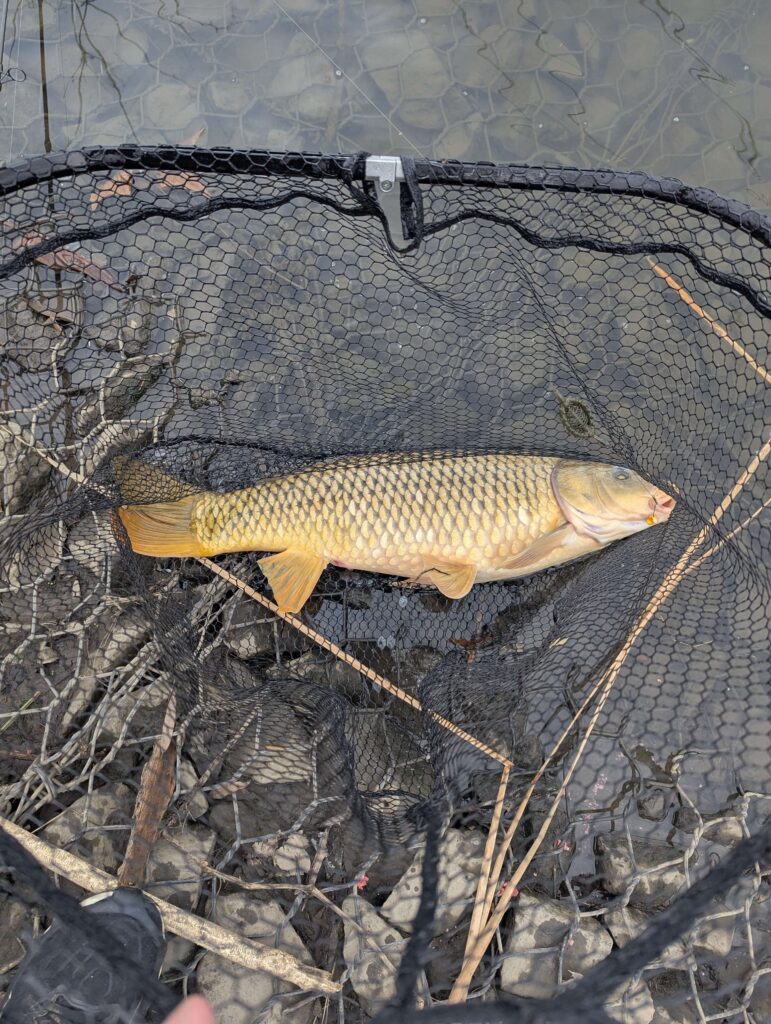
Shallow areas often warm faster than deeper water, especially in spring and early summer. This warmer water attracts both natural food and actively feeding fish. I catch most of my spring and fall fish very close to shore. I fish a tidal river frequently and I find that fishing during the outgoing or incoming low tide is best. When tide is high the carp tend to be active farther out in deep water.
Fishing the margins can also be very effective because carp feel comfortable moving along the shoreline where food naturally accumulates.
Quietly placing a bait just a few feet from the bank can produces surprising results.
Structure and Underwater Features
Carp often relate to underwater features that provide food or shelter. These areas concentrate natural feeding opportunities and become reliable holding spots for fish.
Weed beds are a common example. The vegetation provides cover while also supporting insects and other food sources that carp feed on regularly.
Drop-offs and changes in depth can also attract carp because they provide natural travel routes. Fish may move along these edges while searching for food.
Even small changes in bottom composition can make a difference. Areas where soft silt transitions to gravel or harder bottom often hold more natural food and can attract feeding carp.
Wind and Water Movement
Wind can play a surprisingly important role in carp location. When wind pushes across a lake, it often carries food and oxygen toward the downwind bank.
Over time this movement can concentrate natural food in those areas, which attracts carp.
Many anglers intentionally fish the bank where the wind is blowing toward shore. While this does not guarantee fish, it often increases the chances of finding feeding activity.
Observing wind direction before choosing a swim can sometimes make a noticeable difference.
Combining Location With Simple Rigs
Once a productive area is identified, simple rigs are often all that is needed. Carp that are actively feeding in the right location are far less cautious about bait presentation.
A basic hair rig paired with an effective bait such as corn or a boilie is often enough to produce bites.
When fishing concentrated feeding areas, a method feeder setup can also be very effective because it delivers bait directly to the hookbait.
The key point is that good location often matters more than complex rig setups.
Staying Mobile When Needed
Sometimes carp simply are not present in the area you choose. When that happens, moving to a new location can be the best decision.
Bank anglers who remain flexible often catch more fish because they are willing to follow the signs of activity rather than staying fixed in one spot. Even moving a short distance along the shoreline can place your bait closer to feeding fish.
Finding the right location is often more important than gear, and it is a key part of any effective carp bank fishing setup. Paying attention to the water and adjusting accordingly is often the difference between a quiet day and a productive session.
A Skill That Improves Over Time
Reading the water is a skill that develops gradually with experience. The more time you spend observing lakes and rivers, the easier it becomes to recognize patterns and productive areas.
Over time you begin to notice subtle details such as wind direction, fish movement, and underwater features that influence carp behavior. If you have a productive day of fishing take note of the weather and timing of your catches. For me, spring and fall are much more productive during the late morning hours while in summer I tend to fish in the evenings.
These observations allow you to make better decisions about where to place your bait.
For anglers fishing from the bank, this ability to locate carp is often more important than any single piece of equipment.