Corn and boilies are two of the most widely used options for carp fishing. Both catch carp consistently, but they serve slightly different purposes depending on the situation.
Many anglers strongly prefer one over the other, but in reality both baits have clear advantages. Understanding when to use corn and when boilies may be the better option can dramatically improve catch rates.
In my own fishing I use both, but feed corn and sweetcorn plays a much larger role in my minimalist approach because it is simple, effective, and widely available for cheap.
Why Corn Is One of the Most Effective Carp Baits
Corn has been catching carp for decades and remains one of the most reliable baits available. It is Corn and boilies are two of the most widely used baits in modern carp fishing. Both have proven themselves over decades and continue to catch carp in waters around the world. While many anglers strongly favor one over the other, the reality is that both baits have clear advantages depending on the situation.
In my own fishing I use both corn and boilies, but corn tends to play a larger role in my minimalist approach. It is simple, affordable, and extremely effective, especially for short bank fishing sessions.
Understanding how these two baits differ and when each one works best can make bait selection much easier.
Why Corn Works So Well for Carp
Carp are constantly searching for natural food sources and corn has been used in carp fishing for generations. Carp readily recognize it as food, and its bright color makes it easy for fish to locate on the bottom.
Several types of corn are commonly used by anglers. Sweetcorn from a can is probably the most popular because it requires no preparation and can be fished immediately. Many anglers also use feed corn or field corn that has been soaked and boiled before fishing.
Regardless of the type used, corn offers several advantages. It is inexpensive, widely available, and easy to prepare. A single can of sweetcorn can provide enough bait for multiple fishing trips, while larger quantities of feed corn can be prepared for baiting campaigns or longer sessions.
Corn also presents well on a hair rig. One or two kernels placed just behind the hook create a natural presentation that carp often pick up confidently.
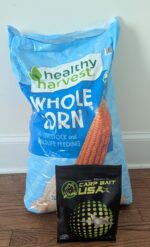
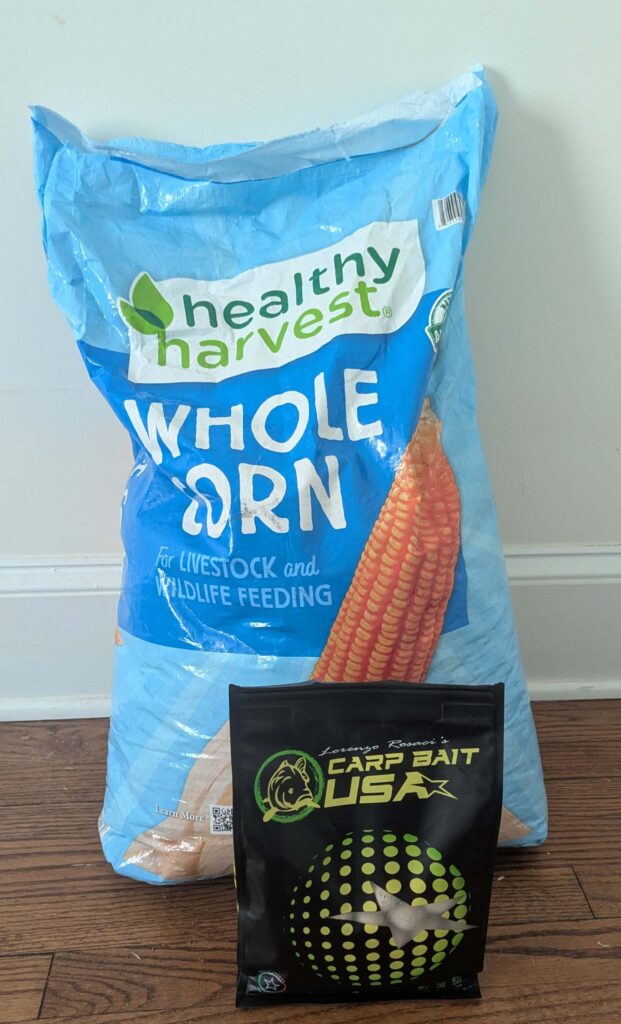
Lately, I’ve almost entirely switched to using feed corn. Feed corn is not processed like canned corn is. You have to soak and boil it, but the result is a hookbait with the effectiveness of corn and the durability of boilies. Feed corn is also cheaper than regular corn. You an buy very large (25 or 50 pound) bags from an agriculture supply store and never run out.
Why Boilies Became Popular
Boilies were developed specifically for carp fishing and have become a staple bait for anglers around the world. Unlike corn, which is a natural grain, boilies are often manufactured from a blend of ingredients that can include fishmeal, grains, oils, and flavorings. You can make your own boilies as well and there are alot of recipes out there.
One of the biggest advantages of boilies is durability. They stay on the hair much longer than softer baits like corn, which makes them ideal for longer fishing sessions. In waters with nuisance fish or strong currents, this durability can be extremely useful.
Boilies also allow anglers to introduce larger food items into the water. Many anglers believe that larger carp often prefer bigger, more substantial food sources, and boilies are designed with this in mind.
Another advantage is consistency. Because boilies are manufactured, anglers can purchase the same bait repeatedly and expect similar results.
Pop-Ups, Wafters, and Other Boilie Variations
Over time several variations of boilies have been developed to create different bait presentations.
Pop-ups are designed to float off the bottom. They are often used in combination with heavier rigs or specialized presentations where the bait sits slightly above the lakebed. This can make the bait more visible and easier for carp to locate, especially in areas with weed or debris.
Wafters are another popular variation. These are designed to be nearly weightless when combined with the hook, allowing the bait to balance lightly on the bottom. The idea is that carp can inhale the bait more easily because it requires very little effort to lift.
There are also harder boilie-style baits that are designed to resist nuisance fish for long periods. These can be useful when fishing waters with smaller fish that quickly destroy softer baits.
These variations all build on the same basic boilie concept while allowing anglers to adjust how the bait behaves in the water. I have another article dedicated to these popular baits and understanding when to use them for your presentation.
When Corn Is the Better Choice
Corn is particularly effective when simplicity and quick results matter.
For shorter fishing sessions, corn is hard to beat. It requires almost no preparation and can be fished immediately after arriving at the water. This makes it ideal for anglers who prefer quick trips or mobile bank fishing.
Corn also performs well in waters where carp are used to natural food items. Because it resembles common grains that fish encounter regularly, carp often feed on it confidently.
Another advantage is cost. Corn is one of the most affordable carp baits available, which makes it perfect for anglers who fish often or prefer a simple bait strategy.
For many situations, a small hair rig with one or two kernels of corn is more than enough to produce bites.
When Boilies Work Better
Boilies often become more useful during longer sessions or when fishing in waters with heavy fishing pressure.
Because boilies stay on the hair for long periods, they allow anglers to leave a bait in the water without worrying about it breaking down quickly. This can be helpful when waiting for larger carp that feed less frequently.
Boilies also allow anglers to develop more structured baiting strategies. Some anglers introduce small amounts of boilies regularly to encourage carp to feed in specific areas. Over time this can create a reliable feeding spot.
In lakes where boilies are commonly used, carp may already recognize them as a food source, making them an effective and consistent bait option.
Corn With Method Feeder Fishing
One of the most effective ways to fish corn is with a method feeder setup. The feeder delivers groundbait directly to the hookbait, creating a small feeding area that attracts carp quickly.
Corn works very well in this type of presentation because the bright kernels stand out against the groundbait. Carp feeding in the bait patch often pick up the corn naturally as they search through the loose feed.
A short hair rig with one or two kernels of corn is usually enough to create an effective presentation. This simple combination has produced many carp for bank anglers over the years.
What is the Best Carp Bait, Corn or Boilies?
Both of these baits are commonly used in a practical carp bank fishing setup, especially by anglers fishing in the US. They are effective, and many carp anglers keep both options available so they can adjust depending on the conditions. In fact, it is often recommended to use the two baits together. Use a larger boilie at the hook end of your hair and anchor it with a couple pieces of corn. This approach allows you to catch fish while also offering a presentation for larger carp. I use this approach a lot.
Corn provides a simple, inexpensive bait that works extremely well for everyday fishing. It is easy to obtain, easy to prepare, and consistently catches carp in a wide variety of waters.
Boilies offer durability and flexibility for longer sessions and more technical baiting approaches. In the US where I am we are very fortunate to not have many pressures carp waters. This means that fish can be caught with relative ease when using the right setup.
My recommendation for beginners is to start with corn and boilies and tweak your approach as you go. Both corn and boilies have earned their place in carp fishing because they continue to produce results year after year.
Other Bait Choices
A carp’s diet includes a lot of things and there are plenty of other baits you can experiment with. Small worms (maggots), snails, bread, tiger nuts, mulberries, and even fly fishing can work for carp. The key is finding where and how the fish are feeding and presenting your bait in a way that won’t scare them off.
I personally have used tiger nuts (search chufa seeds) with very good success. These baits are tough and were my go-to before switching to feed corn. I don’t prefer to change my hook baits often when fishing so durability is top of mind for me.