The carp hair rig is one of the most important developments in modern carp fishing. It allows carp to feed naturally while greatly improving hooking efficiency and not scaring away wary fish.
Most modern carp rigs are built around the hair rig principle. Whether fishing boilies, corn, or pack bait, the hair rig is one of the most reliable ways to present bait.
I use hair rigs in nearly all of my carp fishing because they are simple, dependable, and effective in a wide range of conditions.
This guide explains how hair rigs work, why they are so effective, and how to build a reliable hair rig setup for bank fishing. The hair rig is one of the core components of a simple carp bank fishing setup and is widely used in both lakes and rivers.
What Is a Hair Rig?
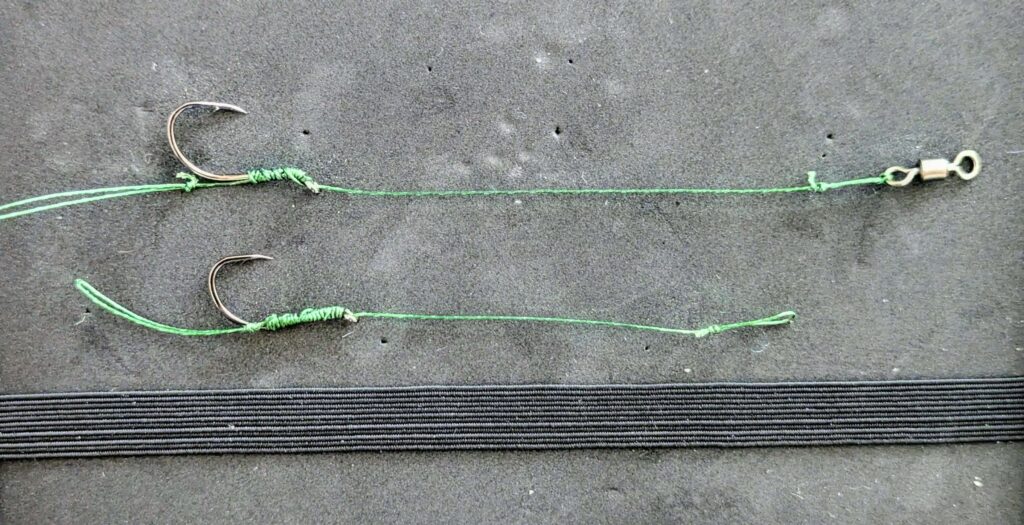
A hair rig is a rig where the bait is attached to a short extension of line called a hair rather than being placed directly on the hook.
The hook remains completely exposed while the bait sits just behind it.
When a carp sucks in the bait, the hook follows naturally into the mouth. As the fish moves away, the hook rotates and catches securely. I discuss this in my other post on method feeders.
This simple change in presentation greatly improves hooking efficiency compared to traditional baiting methods. Different carp rigs can be used depending on your fishing environment, but almost all of them start include the hair rig or some variation of it. In my opinion, the hair rig isn’t a rig at all but a fundamental piece of your carp fishing setup. From the hair rig comes many presentation and baiting possibilities.
Why Hair Rigs Work So Well
Hair rigs work because they allow carp to feed naturally without feeling resistance from the hook.
Natural Bait Movement
When bait is placed directly on a hook, the hook can interfere with how the bait moves in the water.
Hair rigs allow the bait to behave more naturally.
This encourages confident feeding. The longer the fish are feeding the higher your chances of catching.
Improved Hooking Mechanics
Hair rigs separate the bait from the hook.
When a carp picks up the bait, the hook enters the mouth without obstruction.
As the fish moves away, your weight helps the hook rotate and catch in the lower lip. This type of hooking is both secure and safe for the fish.
You can test your hair rig’s effectiveness by using the palm test. Bait a rig and lay the hook and bait in your open palm. Slowly pull the end of the rig dragging the hook over the side of your palm. If your rig is tied correctly you should notice that as the hook begins to fall it starts turning toward your palm attempting to dig in. This is why a hair rig dominates carp fishing.
Consistent Hook Holds
Hair rigs tend to hook carp in similar positions.
Most carp caught on hair rigs are hooked securely in the lower lip.
This consistency reduces lost fish. It also protects the carp from being foul hooked or even ingesting a hook by accident. Carp don’t feed like other fish. They don’t bite down or chew their food right away, instead they suck the food in and keep what they need while expelling the rest.
Basic Hair Rig Setup
The hair is typically formed as a small loop extending from the hooklink.
Bait is attached using a baiting needle and secured with a bait stop.
Most hair rigs use hooklinks between 4 and 10 inches long depending on the fishing situation.
Shorter hooklinks are often used with method feeders and is my preferred way to fish.
Choosing Hook Type and Size
Hook size depends mainly on bait size.
Typical combinations:
Size 8 hooks
- Corn
- Small boilies
- Small pack bait presentations
Size 6 hooks
- Standard boilies
- Larger corn presentations
Size 4 hooks
- Large boilies
- Big carp situations
Hook sharpness is more important than hook size. A sharp hook penetrates quickly and improves landing success. You can use any wide gape or octopus style hook that you like. Hooks are the key factor in having a fun trip or leaving in frustration. I have a separate article that dives deeper on hook size and choice.
Every time I go fishing and every time I land a fish I check my hook for any damage and make sure it’s still as sharp as possible. Many lost carp can be attributed to dull or damaged hooks so changing hooks frequently should be part of your routine.
Hair Length
Hair length affects how easily carp can pick up the bait and how the hook behaves.
A common starting point is leaving a small gape between the hook bend and the bait.
Typical spacing:
- About 1/4 inch for corn
- About 1/2 inch for boilies
Hair length does not need to be exact. Small adjustments can be made depending on how fish respond. I tie my own hair rigs and let’s just say they all have some uniqueness to them.
Hooklink Materials
Hair rigs can be tied using monofilament, fluorocarbon, or braided hooklink material. Each has advantages depending on the fishing situation.
Monofilament hooklinks are:
- Moderately stiff
- Less prone to tangling
- Easy to tie
- Affordable and widely available
Monofilament is a reliable general-purpose hooklink material and works well in most carp fishing situations.
Fluorocarbon hooklinks are:
- Stiffer than monofilament
- More abrasion resistant
- Less visible underwater
- Good for clean bottoms and cautious fish
Fluorocarbon is rarely used as a main line in carp fishing but is commonly used for hooklinks where stiffness and low visibility can improve presentation.
Braided hooklinks are:
- Soft and flexible
- Very natural in presentation
- Excellent for subtle bait movement
Braided hooklinks allow very natural bait movement but can be more prone to tangling if rigs are not tied carefully. Braid is my go-to for my own rigs that I tie, but I have also fished with flouro when a stiffer presentation is needed.
Hair Rigs With Method Feeders
Hair rigs work extremely well with method feeder setups.
Short hooklinks keep the bait close to the feeder.
I keep my hooklinks between 3 and 5 inches in length. This keeps the hook bait positioned within the bait patch created by the feeder.
Short hooklinks also improve hooking efficiency as the carp have less time to react before the weight engages and the hook turns over.
Method feeders and hair rigs form one of the most effective carp fishing combinations available and they’re super easy to use for beginners. Your choice of weight/lead size is also important and should match the water you’re fishing.
Tying a Simple Hair Rig
Basic steps:
- Cut hooklink material
- Form a small loop for the hair
- Tie the hook using a knotless knot
- Attach the hooklink swivel or loop
The knotless knot is commonly used because it aligns the hair and hook naturally.
Important mechanical note: Always tie your knotless not with the end of the line coming through the eye towards the hook. Doing this incorrectly can render your rig useless as the hook won’t have the same ability to turn over in the fish’s mouth.
Simple hair rigs can be tied quickly and require minimal tools.
Basic tools include:
- Scissors
- Baiting needle
- Bait stops
These tools take up very little space in a minimalist bank fishing setup.
Common Hair Rig Mistakes
Hair Too Short
A hair that is too short can interfere with hooking mechanics.
The bait should sit slightly away from the hook.
Hair Too Long
A hair that is too long may reduce hooking efficiency.
Short to moderate hair length works best in most situations.
Dull Hooks
Outside of tying the rig correctly, hook choice and sharpness are the most critical part of car rigs in my opinion.
A dull hook can reduce hookups significantly. You might see bites, but not takes or lose fishing on the way in. These are tell tale signs your hook is not performing. I prefer stiff size 6 or 8 hooks that are as sharp as possible. Right now I use specialist carp hooks from Fox, but you could also use any wide gape or octopus style hook. For sharpness, look for hooks that are labeled as “chemically sharpened”. In my experience these are the sharpest hooks on the market and can withstand a bit more wear before needing to replace.
Hooks should be replaced or sharpened regularly. Always check your hook condition and sharpness before you begin fishing.
Poor Knot Strength
Weak knots can cause lost fish.
Hair rigs should be tied carefully and tested before fishing.
Why Hair Rigs Fit a Practical Setup
Hair rigs are ideal for anglers who want simple and reliable setups.
They require very little equipment and can be tied quickly at home or on the bank.
Once tied, hair rigs are easy to store and transport.
Hair rigs also work with many different bait types, which reduces the need to carry multiple rig styles.
This flexibility makes hair rigs well suited to a compact bank fishing system.
Conclusion
The hair rig remains one of the most effective and essential carp fishing rigs ever developed. Its ability to present bait naturally while improving hooking efficiency makes it a reliable choice in almost any fishing situation.
Hair rigs are simple to tie, easy to use, and effective with many different baits.
For bank anglers looking for a dependable rig, the hair rig is one of the best foundations for consistent carp fishing success.