Hooks are one of the most important parts of any carp fishing setup, yet they are easily overlooked. A well-chosen hook improves hooking efficiency, reduces lost fish, and helps ensure consistent results.
For anglers building a beginner carp fishing setup, understanding hook sizes and basic hook types is far more important than choosing expensive or specialized gear.
This guide breaks down carp fishing hooks in a simple and practical way, focusing on what actually works in real fishing situations.
Why Hook Choice Matters
Carp are powerful fish, and hook performance plays a major role in landing them successfully. I always tell people one of the reasons I enjoy carp fishing so much is how strong these fish are. Good hooks of the right size are incredibly important in your setup.
A good hook should:
- be sharp and strong
- match the bait being used
- appropriate size to catch fish while warding off other species
Even small differences in hook size or shape can affect how well the hook sets and holds during a fight. Hooks also have an effect on which rigs you should use.
Understanding Carp Hook Sizes
Hook sizes can be confusing at first because the numbering system works in reverse. Smaller numbers indicate larger hooks, while larger numbers indicate smaller hooks.
For most carp fishing situations, a few sizes cover nearly everything:
- Size 2–4 → larger baits and bigger fish
- Size 6 → all-around size for most situations
- Size 8 → smaller baits and more cautious fish
For anglers fishing lakes and rivers in carp fishing in the US, sizes 4 to 8 are the most commonly used and provide a reliable starting point. I usually fish in the 4 or 6 range.
Hooks can be complicated because different brands of the same size and actually be different sizes. This is because of manufacturing differences as well as the type and purpose of each hook (wide gap, curve shank, etc).
My recommendation is to stick with one or two well known brands and grab a couple different sizes. As you get more experience you’ll be able to switch things up more and experiment with other brands and hook types.
Choosing the Right Hook Size
The best hook size depends on your bait and presentation.
Larger hooks work well with:
- bigger baits like boilies
- avoiding nuisance fish or other species
- targeting larger fish
Smaller hooks work well with:
- corn and smaller baits
- more pressured fish
- subtle presentations
The key is matching the hook size to the bait so that the presentation looks natural and the hook can set properly. My recommendation for beginners would be to start with a 6 or 8. This will allow you to catch plenty of fish. If you find that you’re catching a lot of other species like catfish, then you may want to increase to the next size.
Common Carp Hook Types
There are many hook patterns available, but a few simple types will cover most situations.
Wide Gap Hooks
Wide gap hooks are one of the most popular options for carp fishing. They are defined by a wider distance between the hook point and the shank, which gives the hook more room to catch and hold in the fish’s mouth.
This wider gap improves hooking efficiency, especially when using larger or bulkier baits, and makes them a very versatile choice across different setups.
They work well with a variety of baits and are commonly used with the hair rig, making them a strong all-around choice for beginner carp fishing.
Common examples include patterns like the Fox Wide Gap and Gamakatsu G-Carp Specialist hooks, both of which are widely used and known for strong hook holds and consistent sharpness.
Curved Shank Hooks
Curved shank hooks are designed with a noticeable bend or curve along the shank of the hook rather than a straight profile. This curved shape changes how the hook behaves when a carp picks up the bait.
As tension is applied, the curved shank encourages the hook to rotate more aggressively, helping the point turn downward and catch hold more quickly in the fish’s mouth.
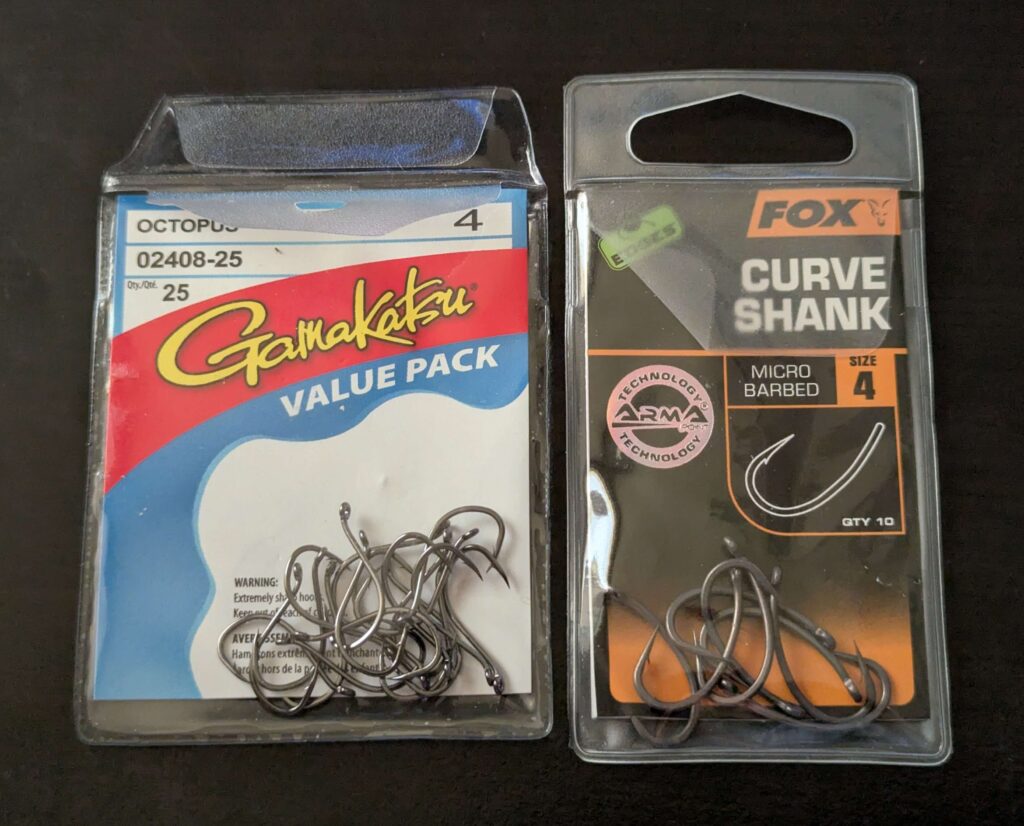
These hooks typically come in long and short shank versions depending on your fishing situation. One well-known example is the Fox Curve Shank, which has been widely used in carp fishing for years. I like this brand because the hook material is thicker and the hook holds up during aggressive takes.
These are often used by anglers looking to refine their presentation while still keeping a relatively simple approach.
Straight Point Hooks
Straight point hooks are exactly what the name suggests. The hook point runs in a straight line with the shank rather than angling inward or curving aggressively.
This design makes them simple, reliable, and easy to use across a wide range of setups. Because the point is straight, they tend to penetrate cleanly and are less dependent on specific rig mechanics.
Hooks like the Gamakatsu Octopus are widely used, especially incarp fishing in the US, because they are extremely sharp, easy to find, and perform well with simple bait presentations like corn.
For anglers focused on consistency and ease of use, this style remains a dependable option.
Matching Hooks to Techniques
Hook choice should match both your bait and the type of presentation you are using. While many hooks can work across different carp rigs and setups, certain shapes tend to perform better depending on how the rig behaves in the water.
For general-purpose setups, wide gap hooks are often the most versatile option. They work well across a range of rigs and bait types, which makes them a reliable starting point for many anglers.
Curved shank hooks are often used in rigs where improved hook rotation is important. Their shape helps the hook turn more aggressively, which can increase hooking efficiency in certain presentations.
Straight point hooks are commonly used in simpler setups and natural bait presentations. They are dependable, easy to use, and perform well when paired with baits like corn or pack bait.
More specialized rigs, such as bottom rigs, snowman presentations, or other variations built around the hair rig, can all be adjusted by changing hook shape and size depending on the situation.
The key is not to match one hook to one rig, but to understand how hook shape affects presentation and hooking performance. This makes it easier to adapt your setup based on conditions rather than relying on a single approach.
Keeping It Simple
One of the biggest mistakes anglers make is overcomplicating hook selection.
In most cases, you can fish effectively with:
- one or two hook patterns
- a small range of sizes (4–8)
Focusing on sharpness, strength, and proper sizing will produce better results than constantly switching between hook types.
These choices all fit into a simple and effective system, which I break down further in my guide to a carp bank fishing setup.
Hook Sharpness and Maintenance
I cannot stress enough how important hook sharpness is for carp fishing. Even the best rig or bait will not perform well if the hook is not sharp enough to penetrate properly. You will lose a lot of fish if you don’t regularly check your hooks!
Carp have tough, rubbery mouths, and a sharp hook is essential for achieving a solid hook hold. A dull hook can result in missed takes or lost fish during the fight.
A simple way to check sharpness is to lightly drag the hook point across your fingernail. A sharp hook should catch immediately without sliding. I refer to this as a hook being sticky, that is even with the smallest touch you should feel the hook wanting to catch your skin.
Over time, hooks can become dull from:
- contact with gravel or rocks
- repeated use
- casting and retrieving
Because of this, it is important to:
- check hooks regularly
- replace dull hooks
- avoid reusing damaged hooks
Some anglers choose to sharpen hooks, but for most setups, simply replacing them is the easiest and most reliable approach. When buying hooks, look for options specifically designed for carp or ones the mention “chemically sharpened”. These hooks are designed for sharpness and durability resulting in the need to change the out less frequently.
Focusing on hook sharpness alone can significantly improve your results, especially when using simple and proven rigs like the hair rig or methods such as the method feeder setup. A good rule of thumb is to check your hooks before each fishing trip and after each catch. Carrying a few extra rigs is essential.
Tips for Better Hook Performance
A few simple habits can improve hook performance:
- check hook sharpness regularly
- replace dull hooks
- match hook size to bait
- avoid overcomplicating rigs
These small details make a noticeable difference over time.
This article contains affiliate links, for more information please see my Privacy Policy.