Method feeder carp fishing is one of the most reliable and efficient ways to catch carp from the bank. It combines bait presentation and weight into a single system that consistently produces bites in lakes, rivers, and pretty much any body of water where carp live.
For bank anglers who want a practical and dependable setup, the method feeder is hard to beat. It allows accurate casting, consistent bait placement, and simple rigs that work across many different waters.
I rely heavily on method feeders in my own fishing because they are simple to use and extremely effective. A well-prepared method feeder can outfish more complicated approaches while keeping the overall setup compact and easy to manage. This method fits perfectly into a simple carp bank fishing setup because it combines bait and presentation into one efficient system.
This guide explains how method feeders work, how to set them up, and why they are especially effective for bank fishing.
What Is a Method Feeder?
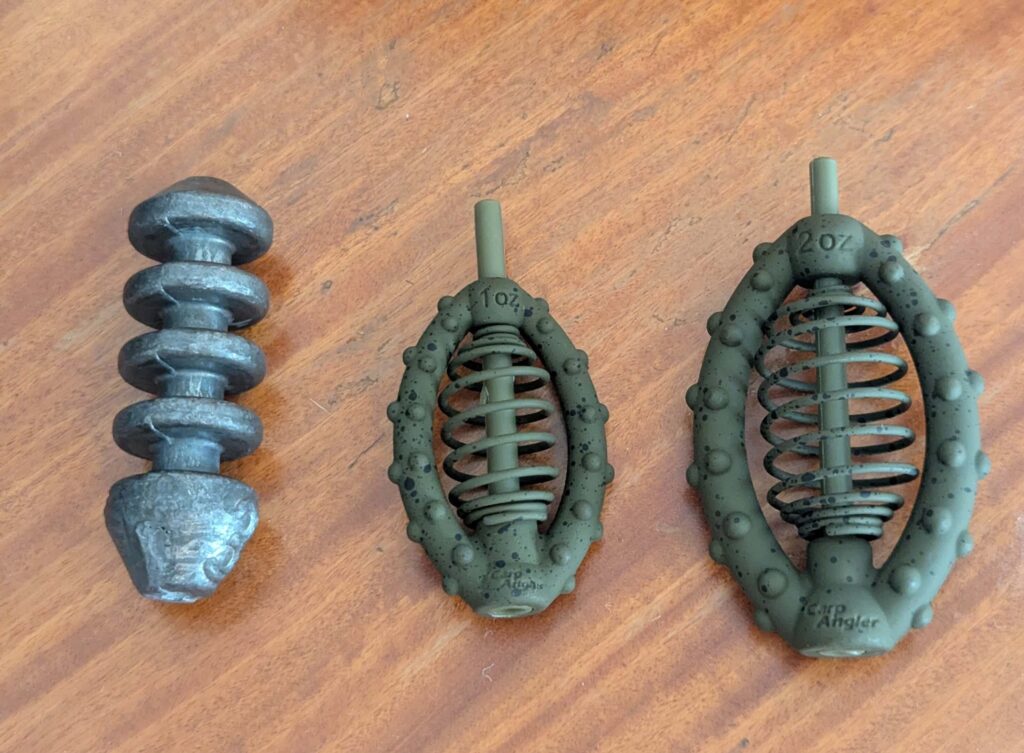
A method feeder is essentially a weight with built in capability to hold groundbait or pack bait around the outside or inner part of the weight. The hook bait is placed either inside your bait ball or positioned directly beside it. This helps prevent your hair rig from tangling with the weight during cast.
When the feeder reaches the bottom, the bait begins to break down and form a concentrated feeding area for the carp. The hook bait sits directly within this area and as carp feed on your pack bait they are likely to pick up your hook in the process.
Unlike traditional cage feeders that release loose feed over a wide area, method feeders create a tight feeding zone around the hook bait. This concentration of bait is one reason method feeders are so effective.
Most method feeders are flat on one side, allowing them to settle securely on the bottom. This stability helps keep the baited hook in the correct position. However, there are a variety of method feeders and sizes. A simple inline method feeder is all you need to get started.
Why Method Feeders Work So Well
Method feeders combine several advantages into one simple system.
Concentrated Feeding Area
The feeder delivers bait and hook bait in exactly the same location. Carp investigating the bait patch are very likely to encounter the hook bait.
This increases the chance of a solid hookup.
Built-In Weight for Hooking Fish
Most method feeders weigh between 1 oz and 3 oz. This provides enough resistance for carp to hook themselves when they pick up the bait and move away. You may hear the term bolt-rig or bolt effect. This refers to the concept that when a carp picks up your hook the weight acts as an anchor and if you tied your rig properly the hook will turn over and hook easily into the carps mouth.
This semi-fixed resistance is one reason method feeder rigs work well with bite alarms or tight lines.
Accurate Casting
Method feeders are compact and aerodynamic. This makes them easy to cast accurately compared to loose feeding approaches.
Accurate casting helps maintain a consistent feeding area over multiple casts.
Works in Many Conditions
Method feeders are effective in most carp fishing waters:
- Small lakes
- Large lakes
- Slow rivers
- Back channels
This versatility makes them ideal for anglers who fish different locations without changing their entire setup. Instead of rebaiting a hair rig each time, you just add more pack bait and cast out. I only add more pack bait roughly every 90 minutes, sometimes on the hour if I’m fishing heavy current.
Basic Method Feeder Setup
A method feeder rig is simple and reliable.
Typical setup:
Main line -> weight stopper -> feeder -> short hair rig -> hook -> bait
Most method feeder hooklinks are short, usually between 3 and 5 inches. The short length keeps the hook bait close to the feeder. I tie my own rigs and shorter will definitely increase your chance at hooking a carp.
Short hooklinks and sharp hooks improve hooking efficiency because the carp quickly encounters resistance from the feeder weight.
I exclusively use hair rigs with method feeders because they allow natural bait presentation. I also match my hook bait with ingredients in my pack bait. This ensures the carp won’t exclusively feed on the pack bait and pass up my rig entirely.
Choosing the Right Feeder Weight
Feeder weight depends on casting distance and water conditions.
Typical ranges:
1 oz feeders
- Shorter rods and rods with low test curve
- Small lakes
- Calm water
2 oz feeders
- Medium casting distances
- Most general fishing
3 oz feeders
- Long casts
- Heavy current
- Windy conditions
Most of my fishing is done with 1 oz and 2 oz method feeders, which provide enough casting weight without requiring heavy tackle. Remember, your pack bait adds additional weight to your setup. I find the 2oz to be a great middle ground.
Heavier feeders can increase casting distance but also require stronger rods and more effort to cast consistently.
Pack Bait for Method Feeders
Method feeders work best with pack bait that holds together during the cast but breaks down after reaching the bottom.
Good pack bait should:
- Compress firmly into the feeder
- Stay attached during casting
- Begin breaking down within a few minutes
If the bait breaks apart during the cast, the feeder loses its effectiveness. This could mean you’re weight is too heavy for your setup, you’re casting with too much force, or your pack back is the wrong size or consistency. It takes some trial and error to dial these things in but don’t get discouraged. I’ve lost tons of pack bait over the years.
If the bait stays intact too long, it may not release enough attraction into the water. This usually means your bait is too dense.
Finding the right consistency is one of the most important parts of successful method feeder fishing. My go-to recipe consists of panko bread crumb, cream or canned corn, and strawberry Jello mix. If you accidentally use regular bread crumbs your pack bait will turn into concrete! I’m kidding of course, but it would be way too dense to be effective (trust me I made this mistake).
The fun part is experimenting with different baits and seeing what works best for the fish in your area.
Hook Baits for Method Feeders
Common hook baits include:
- Sweetcorn or feed corn
- Boilies
- Artificial corn or maggots
- Tiger nuts
Hair rigs are often used because they allow the hook bait to sit naturally within the bait patch.
Small hook baits often work best because carp feed confidently on compact bait patches. However, if you’re targeting larger carp then a larger hook bait can sometimes help you avoid the smaller fish. I cover the importance of hook sizes in this article.
Casting Method Feeders
Method feeders cast best with smooth, controlled casts.
Casting too aggressively can cause pack bait to break off the feeder.
Most of my method feeder casts are moderate rather than maximum distance. A consistent cast that keeps the bait intact is more productive than occasional long casts.
This controlled casting approach is especially important when fishing pack bait. A useful tip here is to gently press your hook into your pack bait before casting. This prevents the rig getting tangled and also ensure a good presentations as the pack bait begins to break up in the water.
Choosing the right main line is important when casting accurately and at longer distances with method feeders. I discuss this in more detail in my guide to mono vs braid carp fishing.
Method Feeders for Bank Fishing
Method feeders are particularly well suited to bank fishing.
They reduce the need for loose feeding equipment and keep the overall setup simple.
Instead of carrying multiple baiting tools, a bank angler can carry:
- Method feeders
- Pack bait
- Hook baits
This efficiency makes method feeders ideal for anglers who want a compact fishing system.
Method feeders also allow quick setup and relocation, which is useful when fishing multiple spots along the bank.
Common Mistakes With Method Feeders
Pack Bait Too Dry
Dry bait may break apart during the cast.
This spreads bait away from the hook.
Pack Bait Too Wet
Wet bait may stay packed too tightly.
This reduces attraction.
Hooklink Too Long
Long hooklinks reduce hooking efficiency.
Short hooklinks are more effective with method feeders.
Casting Too Hard
Hard casting often knocks bait off the feeder.
Smooth casting improves consistency.
Why Method Feeders Fit a Practical Setup
Method feeders combine several functions into one piece of equipment.
They:
- Deliver bait
- Provide casting weight
- Help hook fish
This efficiency makes them ideal for practical bank fishing setups.
Method feeders allow anglers to catch carp consistently without carrying large amounts of extra equipment.
For anglers who prefer simple and effective systems, method feeders are one of the most valuable tools available. If you want to see my full minimalist carp setup have a look at my earlier post.
Conclusion
Method feeder fishing is my favorite and preferred way to catch carp from the bank. The combination of bait delivery, casting weight, and reliable hooking makes method feeders both simple and productive.
A properly prepared method feeder rig can catch carp in a wide range of conditions while keeping the overall setup compact and manageable.
For bank anglers looking for a dependable approach, method feeders provide one of the best balances between simplicity and effectiveness.
This article contains affiliate links, for more information please see my Privacy Policy.