If you’re new to carp fishing, it’s easy to assume that all carp are basically the same fish. After all, anglers often use the word “carp” as a catch-all term without distinguishing between species or varieties.
In reality, several types of carp are commonly encountered in the United States, and understanding the differences can help explain why some fish behave differently, feed differently, and respond to different fishing approaches.
The three most commonly discussed types are common carp, grass carp, and mirror carp. While they share some similarities, they differ in appearance, feeding habits, and how anglers typically target them.
For beginner carp fishing, learning these differences can prevent confusion and help you make better decisions on the water. An important note is that this article discusses carp in America which has its own variation from Europe and other parts of the world.
Common Carp: The Fish Most Anglers Target
When most anglers talk about carp fishing, they are referring to common carp.
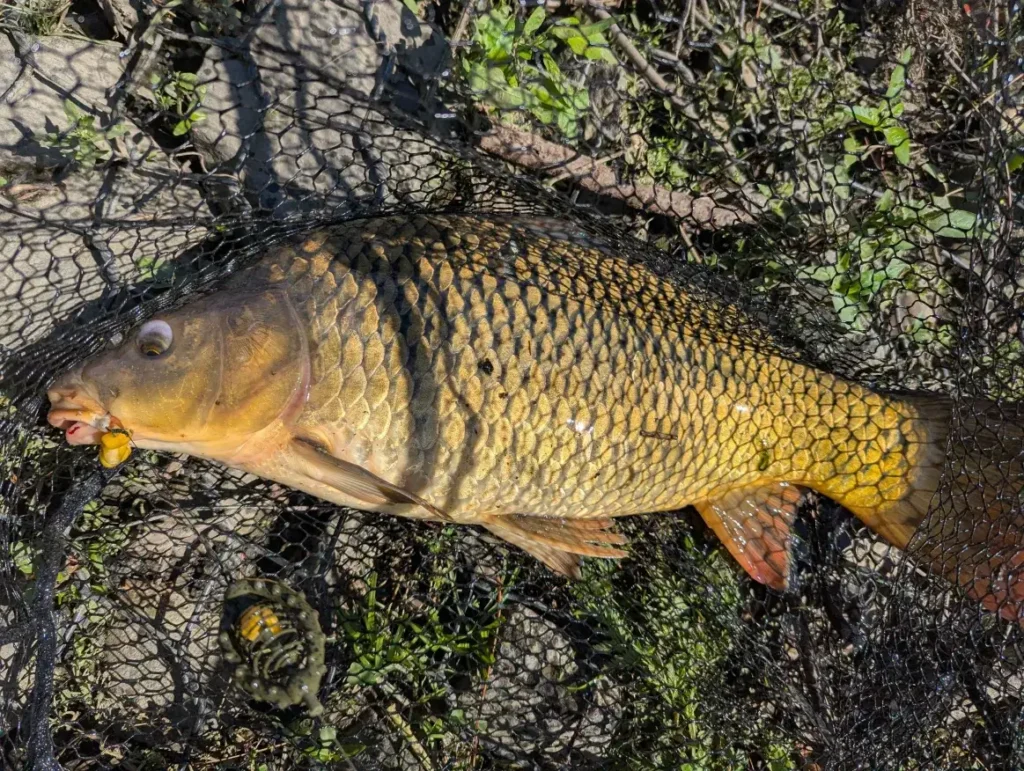
Common carp are widespread throughout the United States and can be found in lakes, ponds, rivers, reservoirs, and canals. They are highly adaptable fish that thrive in a wide variety of environments.
One reason common carp are so popular among anglers is their feeding behavior. They are opportunistic omnivores that consume insects, larvae, crustaceans, plant material, grains, and many other food sources.
This broad diet is one reason common carp respond well to popular baits such as:
- corn
- pack bait
- boilies
- pellets
- bread
Their willingness to investigate food makes them well suited to many of the techniques discussed throughout this site.
How to Identify Common Carp
Common carp have a fairly consistent appearance.
Key characteristics include:
- fully scaled body
- bronze or golden coloration
- barbels near the mouth
- long dorsal fin
- deep body profile
Most fish encountered by beginner carp anglers in the US will be common carp.
Mirror Carp: A Variation of Common Carp
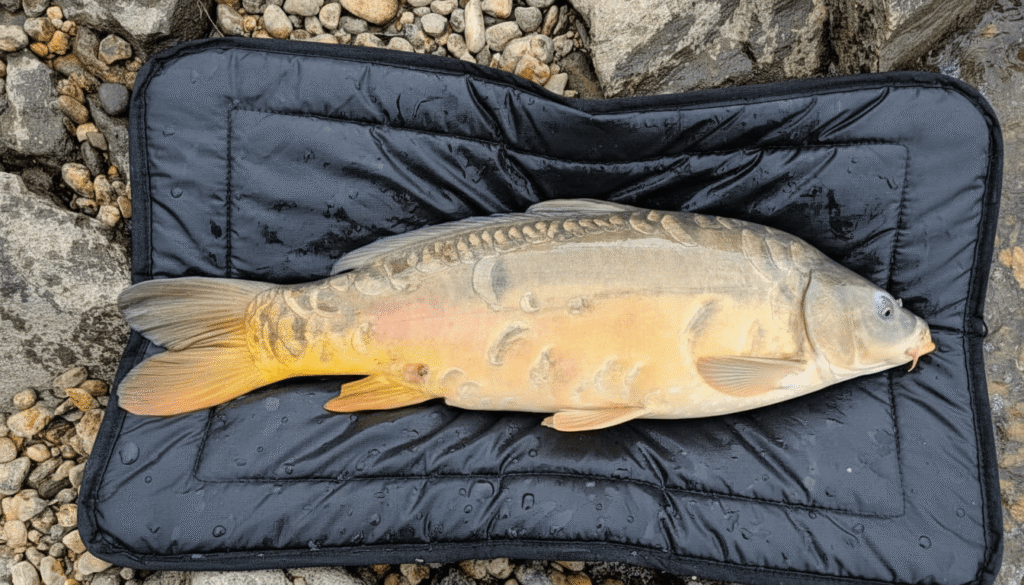
Mirror carp are not a separate species. Instead, they are a genetic variation of common carp.
What makes mirror carp unique is their scale pattern. Rather than having scales evenly covering the entire body, mirror carp have scattered, irregular scales that can vary dramatically from fish to fish.
Some fish may have only a handful of scales. Others may have large patches arranged in unusual patterns.
This distinctive appearance makes mirror carp especially popular among carp anglers because every fish looks slightly different.
How to Identify Mirror Carp
Mirror carp typically have:
- scattered large scales
- irregular scale patterns
- body shape similar to common carp
- similar coloration to common carp
- barbels near the mouth
The easiest identification method is simply looking at the scales.
If the scale pattern appears incomplete or unusually patchy, you are likely looking at a mirror carp.
Grass Carp: A Very Different Fish
Grass carp are frequently introduced by states to control invasive grasses and weeds in local waters. That means in many cases they are heavily regulated and it is not legal to keep these fish; they must be returned to the water unharmed. Grass carp often create confusion because they look similar to other carp at first glance.
However, grass carp are a separate species with different feeding habits and behavior.
Unlike common carp, grass carp primarily consume aquatic vegetation. Because of this specialized diet, grass carp are often less predictable from a fishing perspective.
They can still be caught by anglers, but many of the traditional carp fishing tactics used for common carp do not always produce the same results. Grass carp are also very easily spooked and among all carp species require special attention to noise and bait placement. Anglers prefer to use bread or floating baits to reduce noise and also stay out of sight of the fish. If spooked, the grass carp will leave the area and not bite.
This is why understanding What Do Carp Eat? becomes especially important when discussing grass carp.
How to Identify Grass Carp
Grass carp have a noticeably different body shape.
Typical grass carp characteristics include:
- longer, more torpedo-shaped body
- darker coloration, more silver in color
- large scales arranged in a uniform pattern
- no deep hump-backed profile
- blunt head shape
Compared to common carp, grass carp often appear more streamlined and athletic. These fish grow to be very long and impressive weights.
Many anglers first mistake them for oversized common carp until they get a closer look.
Do They Eat the Same Things?
Not exactly.
Common Carp
Common carp are opportunistic omnivores and consume a wide variety of food sources.
This broad feeding behavior is one reason they respond so well to many bait options discussed in Best Bait for Carp Fishing.
Mirror Carp
Mirror carp feed almost identically to common carp because they are simply a variation of the same species. From a fishing perspective, anglers generally treat them the same way.
Since they are a variation of common carp there’s no way to separately target mirror carp, but it’s always a nice surprise catching one.
Grass Carp
Grass carp are much more plant-oriented.
While they can occasionally be caught using unconventional baits, their feeding behavior is significantly different from common carp.
This distinction often explains why anglers targeting common carp sometimes see grass carp nearby without successfully catching them.
Do They Live in Different Places?
There is significant overlap.
Common carp and mirror carp can be found in many of the same waters.
Grass carp are also present in numerous lakes and ponds, particularly where vegetation management programs exist.
However, locating fish remains more important than focusing solely on species.
Many of the principles discussed in How to Find Carp in Lakes and Rivers apply regardless of the exact carp you are targeting.
Other Fish Commonly Confused With Carp
Not every large fish that resembles a carp is actually a carp. Several species are frequently misidentified, especially by newer anglers or people sharing photos online.
Understanding the differences can help you correctly identify your catch and better understand the waters you fish.
Buffalo Fish
Buffalo are among the most commonly misidentified fish in North America.
Unlike common carp, buffalo belong to the sucker family and are native to the United States. They often have a similar body shape and can grow to impressive sizes, which leads many anglers to assume they are carp.
Key differences include:
- no barbels near the mouth (main indicator)
- smaller, more downward-facing mouth
- generally smoother appearance
- native North American species
Many anglers are surprised to learn that a large fish they believed was a carp is actually a buffalo.
Silver Carp and Other Asian Carp
In many parts of the United States, anglers casually use the term “Asian carp” to describe several introduced species. While grass carp are technically one of those species, most people using the term are referring to silver carp or bighead carp rather than the grass carp targeted by anglers.
Silver carp are the species most anglers recognize because of their unusual behavior. They are famous for leaping from the water when disturbed by boat traffic.
Unlike common carp, silver carp are filter feeders that consume plankton rather than rooting along the bottom for food.
Typical characteristics include:
- high-set eyes
- large head
- silver coloration
- tendency to jump when startled
Although they share the word “carp” in their name, silver carp behave very differently from the fish targeted by most carp anglers.
Koi and Released Goldfish
Many ponds, lakes, and urban waterways contain koi or goldfish that were originally kept as pets.
Unfortunately, releasing aquarium or pond fish into public waters remains fairly common.
Koi are actually domesticated varieties of common carp, which explains why they often look very similar aside from their bright colors and distinctive patterns.
Goldfish are exactly what you think and yes, goldfish introduced in an area with no natural predators can reach large enough size to bite your hookbaits.
Even though the introduction of the fish is illegal in most states, encounters with koi and large goldfish are not uncommon in some areas.
Why Identification Matters
Correct identification helps anglers understand fish behavior, feeding habits, and regulations.
A feeding strategy that works well for common carp may not work for buffalo fish or silver carp, while a brightly colored fish that appears unusual may simply be a koi rather than a rare species.
For most beginner carp fishing in the US, learning to identify these commonly confused fish makes understanding local waters much easier.
Which Carp Is Hardest to Catch?
Many anglers would argue grass carp.
Their feeding habits tend to be less predictable from a traditional carp-fishing perspective, and they often show less interest in common carp baits. For more information see my article on how to target grass carp.
Common carp are generally the most practical target for beginners because their feeding behavior aligns well with simple and proven carp tactics.
Mirror carp are not necessarily harder to catch than common carp. They are simply encountered less frequently in many US waters.
Can You Fly Fish for All Three?
Yes, although common carp remain the most common target.
Because fly fishing often relies on presenting flies that imitate natural food sources, common carp are particularly well suited to the approach.
Grass carp can occasionally be caught on fly tackle, but they typically require more specialized presentations.
For anglers interested in this approach, Fly Fishing for Carp explores the topic in greater detail.
Why Understanding the Differences Matters
Many beginner anglers spend time worrying about species identification when they should be focusing on behavior.
The most important lesson is that common carp and mirror carp are generally targeted using the same methods, while grass carp often require a different mindset due to their feeding preferences.
Recognizing those differences helps explain why certain baits, locations, and presentations work in some situations but not others.
Final Thoughts
Common carp, grass carp, and mirror carp all belong to the broader carp family, but they are not identical fish.
Common carp are the primary target of most carp anglers because of their widespread distribution and adaptable feeding habits.
Mirror carp are simply a unique-scaled variation of common carp that many anglers consider especially memorable catches.
Grass carp are a separate species with different feeding behavior and often require different tactics to target consistently.
Understanding those distinctions will make it easier to interpret fish behavior and choose effective strategies as you continue developing your carp fishing skills.