Rod support systems are a fundamental part of carp fishing gear. Whether you are fishing with one rod or several, you need a stable way to position your rods effectively while waiting for a bite.
Two of the most common options are banksticks and rod pods. Both are widely used by carp anglers, but they serve slightly different purposes depending on the fishing environment and personal style.
Some anglers strongly prefer rod pods, especially when fishing multiple rods or hard surfaces where banksticks cannot be pushed into the ground. Others (myself included) prefer banksticks because they are lighter, simpler, and easier to carry.
For anglers who focus on a mobile bank fishing approach, choosing the right rod support system can make a noticeable difference in both comfort and efficiency.
What Are Banksticks
Banksticks are individual metal stakes that are pushed into the ground to support rod rests or bite alarms. They are one of the simplest and most traditional rod support systems used in carp fishing. They can be made of aluminum or stainless steel.
Most banksticks are adjustable so anglers can raise or lower the rod height depending on the terrain or fishing situation. Rod rests or bite alarms screw directly into the threaded top of the bankstick.
Because they are independent of each other, banksticks allow anglers to position each rod individually. This flexibility makes them especially useful when fishing uneven terrain or when adjusting rod angles in rivers.
Banksticks are also extremely compact. A few lightweight sticks can easily be attached to a backpack or carried alongside other gear, making them ideal for anglers who move frequently along the bank or wish to cover a wider area in one session.
What Are Rod Pods
Rod pods are freestanding rod support systems that hold multiple rods on a single frame. Instead of pushing individual sticks into the ground, the rods are mounted on a horizontal bar supported by adjustable legs.
Most rod pods are designed to hold two or three rods, although larger models exist for anglers fishing more rods.
Rod pods are particularly useful on flat or hard surfaces such as wooden platforms, concrete banks, or rocky ground where banksticks cannot be pushed into the soil.
Because all rods are mounted on a single frame, rod pods also make it easier to keep rods aligned and organized in a tight area.
However, rod pods are usually larger and often heavier than banksticks, which can make them less convenient for anglers who prefer a lightweight setup. The benefit of a rod pod is having everything in a single system, but they can be very bulky and often require you to carry a separate case or storage. Setup is also sometimes required which adds time to getting your rods into the water.
Stability and Terrain
One of the most important factors when choosing between banksticks and rod pods is the terrain where you fish.
Banksticks work best in soil, grass, or other soft ground where they can be pushed firmly into place. Once secured, they provide excellent stability and allow anglers to adjust each rod independently.
Rod pods become more useful when the ground is too hard for banksticks. On rocky banks, wooden docks, or concrete edges, a rod pod may be the only practical option.
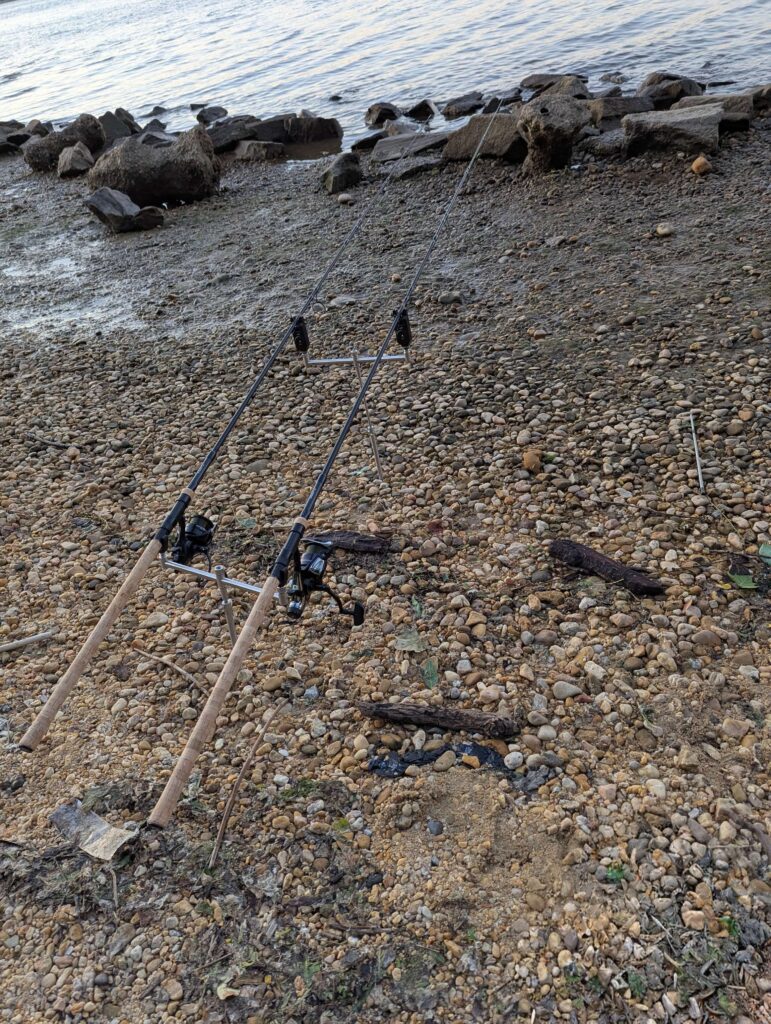
Some anglers carry both systems depending on the water they plan to fish, but many bank anglers simply choose the option that fits their usual fishing locations. A good balance I have found are banksticks that have a screw point on the end. This helps them dig into the ground and with some effort you can use them in rocky and hard surface areas as I do frequently.
Mobility and Convenience
For anglers who move frequently along the bank, banksticks often have a clear advantage.
A set of lightweight banksticks can be packed quickly and carried with minimal effort. This makes them ideal for anglers who prefer short sessions or who regularly change spots in search of active fish.
Rod pods, while very stable, usually take longer to assemble and pack away. Their larger size can also make them slightly less convenient when hiking along the shoreline or accessing more remote swims.
Because of this, many mobile carp anglers prefer the simplicity and portability of banksticks.
Fishing Multiple Rods
Rod pods become more appealing when anglers fish multiple rods in a tight area. I also find that rod pods are more beneficial for controlling the angle of your rod in relation to the water.
For carp fishing, you want your rod to be close to parallel with the water’s surface or slightly angled up. It’s very easy with a large bankstick to forget this. You might lose some fish when they bite as it reduces the effectiveness of your rig and bait runner. Proper rod positioning also helps manage line tension when using rods with different test curves.
Because all rods are mounted on a single frame, the rod pod setup tends to remain neatly aligned. Bite alarms and rod rests can also be mounted in a consistent position, which some anglers find easier to manage during busy sessions.
Banksticks can still handle multiple rods effectively, but they require each rod to be positioned individually. This is rarely a problem, but it does take a little more adjustment when setting up. Personally, I keep my bite alarms attached to my banksticks so that all I need to do is screw them into the ground and I’m ready to go.
When searching for gear you will also come across the term ‘buzz bar”. These are attachment bars that transform a single bankstick or rod holder into a multiple rod setup. Think of it like like end of a rod pod, but as a standalone attachment. These can be useful when mixing a bankstick and rod pod approach. It allows you to fish hard surfaces and uneven terrain because the two ends of your makeshift rod pod are independent of each other.
Why Many Bank Anglers Prefer Banksticks
Banksticks have remained popular for a simple reason: they are practical. If you’ ever go fishing in the US you’ve ever gone fishing you will frequently see people making their own banksticks out of literal sticks they find on the ground.
There are also banksticks made for different types of fishing, some have the rod support built in or in sandy areas a piece of PVC is often used. The point is, banksticks are not uncommon. The main difference is that specialized banksticks that we often use for carp fishing have a spot at the end for screwing in your bit alarm or rod support.
They are lightweight, easy to carry, and extremely flexible when positioning rods. For anglers who value mobility and simplicity, banksticks fit naturally into a minimalist fishing approach.
Individual sticks also allow rods to be positioned at slightly different angles, which can help with line management when fishing rivers or uneven banks.
For many anglers fishing short sessions or moving between locations, this flexibility outweighs the advantages offered by rod pods.
Choosing the Right Option
Rod support is just one part of a larger carp bank fishing setup, where simplicity and flexibility often lead to better results. Both banksticks and rod pods are effective rod support systems. The best choice depends largely on where and how you fish.
If you typically fish soft banks and prefer a lightweight setup, banksticks are often the simplest and most practical option. They are easy to transport and provide excellent flexibility when positioning rods.
If you frequently fish hard surfaces or prefer a more structured rod arrangement for longer fishing trips, a rod pod may be the better choice.
I’ve found a nice balance of using banksticks with a screw point on the end for digging into rocky or harder surfaces. I also don’t see the need in buying separate rod supports when you can get a reasonably cheap set of bite alarms that can do both jobs.