Choosing the right fishing line is one of the most important decisions in carp fishing. Rods and reels matter, but your line is what actually connects you to the fish. A poor line choice can reduce casting distance, cause lost fish, or make fishing more difficult than it needs to be.
For bank fishing in particular, line choice affects everything from casting range to bite detection and fish control. Over time I have fished with both monofilament and braided line while targeting carp in rivers and lakes. Each has strengths and weaknesses, and understanding those differences makes it easier to build a practical and reliable setup.
This guide explains the differences between monofilament and braid for carp fishing and how each performs in real bank fishing situations.
Understanding Monofilament Line
Monofilament is the most common line used in carp fishing and remains the standard choice for many anglers.
Monofilament line is made from a single strand of nylon. It has moderate stretch, good abrasion resistance, and is generally easy to handle.
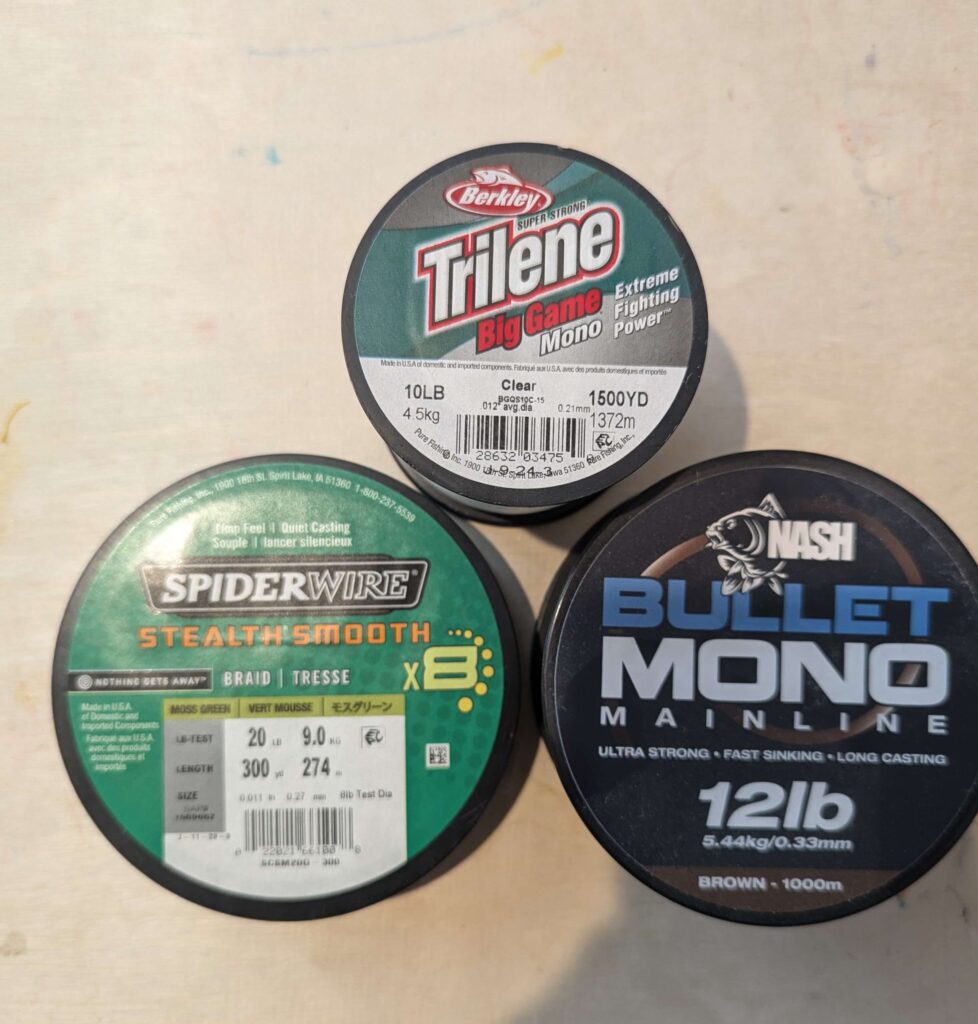
Most of my carp fishing is done with monofilament. I currently fish 12lb mono on my carp rods and have found that around 15 lb test is an ideal balance of strength and castability for large carp. If you go higher than 15lbs just makes sure you’re note exceeding your reel’s capacity. I describe my full minimalist carp fishing gear setup in detail in another article.
Advantages of Monofilament
Shock Absorption
Monofilament stretches under pressure. This stretch helps absorb sudden runs from large carp and reduces the chance of hook pulls.
This is especially helpful when fishing shorter rods where cushioning from the rod is limited. Rod power and test curve also affect how much pressure a setup can handle.
Forgiving During the Fight
The stretch in monofilament makes fighting fish smoother and more forgiving. Sudden surges from big carp are less likely to result in lost fish.
For anglers fishing from uneven banks or tight areas, this extra forgiveness can make a noticeable difference.
Better Abrasion Resistance
Carp are often hooked near rocks, timber, or rough bottom structure. Monofilament tends to handle abrasion better than braid in many situations.
This is important when fishing rivers or snaggy lakes.
Easier to Manage
Monofilament is generally easier to spool and less prone to tangles and wind knots. It behaves predictably on spinning reels and works well with a wide range of rigs.
For a simple and reliable setup, mono is hard to beat.
Disadvantages of Monofilament
Reduced Sensitivity
Because monofilament stretches, it transmits less information from the rig to the rod.
Small movements on the bottom are harder to feel compared to braided line. This matters if you’re fishing in highly pressured waters where carp bites might be more subtle.
Lower Casting Distance
Monofilament is thicker than braid at the same breaking strength. The increased diameter creates more friction through the guides and reduces casting distance.
Understanding Braided Line
Braided line is made from multiple fibers woven together. It has almost no stretch and a very small diameter relative to its strength.
I use braided line on my longer surf-style rod, spooled with 20 lb braid and finished with a monofilament leader.
This setup allows longer casts while still maintaining some shock absorption from the leader.
Advantages of Braid
Excellent Casting Distance
Braid’s small diameter allows it to travel through the guides with less resistance.
When fishing larger sections of river, braid makes it easier to reach distant spots that would be difficult with monofilament.
High Sensitivity
Because braid has almost no stretch, it transmits movement extremely well.
You can feel bottom composition and subtle movement much more clearly compared to mono.
This is useful when locating harder bottom areas where carp often feed.
Higher Strength for Diameter
Braid provides more strength at a smaller diameter than mono. This allows heavier line to be used without sacrificing casting performance.
Disadvantages of Braid
Lack of Stretch
The biggest disadvantage of braid is the lack of stretch.
Without shock absorption, sudden runs from carp place more stress on knots and hooks. Braid is far less forgiving in snaggy areas which I frequently fish.
Using a monofilament leader helps compensate for some of this.
Lower Abrasion Tolerance
Braid can be vulnerable to abrasion when dragged across rocks or rough structure.
This is one reason many carp anglers prefer mono for general bank fishing.
More Demanding Setup
Braid requires more attention to knots, leaders, and drag settings. Unless you purchase specialty braid, most braid floats meaning you cannot use braid by itself without a sinking leader.
Casting Distance Comparison with Pack Bait
Most of my carp fishing uses pack bait on a method feeder. This affects realistic casting distance because casting too aggressively can cause the bait to come off the feeder.
Because of this limitation, practical casting distance is often lower than maximum rod capability.
Based on my own fishing:
9 ft Rods with Monofilament
- Typical casts: 40–50 yards
This distance is more than enough for many lakes and back channels.
10 ft Rods
- Typical casts: 50–70 yards
This is a useful middle ground when slightly more distance is needed.
12 ft Rod with Braid
- Typical casts: 90–110 yards
This setup allows me to reach fish in larger sections of river where carp hold far from shore.
These distances reflect realistic pack-bait fishing rather than maximum casting performance.
Choosing the Best Line for Carp Fishing
For most bank carp fishing situations, monofilament remains the most practical choice.
Mono is simple, reliable, and forgiving. It handles a wide range of fishing conditions without requiring complicated setups.
For anglers fishing primarily within 70 yards, monofilament is usually the best option.
Braid becomes useful when extra casting distance is needed or when fishing very large water.
Using braid with a monofilament leader provides a good balance between casting performance and fish-fighting control.
Line Strength Recommendations
Choosing the right line strength matters as much as choosing the line type.
For most carp bank fishing:
Monofilament
- 12–15 lb test works well for large carp
This range balances casting performance and strength.
Braided Line
- 20–30 lb braid works well with spinning reels
This provides strong hooksets and good casting distance.
Leader material should generally match or slightly exceed the strength of the main line.
Monofilament vs Braid for Carp Fishing
After fishing with both line types, my approach is simple.
I use monofilament on my dedicated carp rods because it is reliable and forgiving. I use braid on my longer rod when distance matters.This combination covers most situations without making the setup complicated.
For anglers building a simple and effective carp fishing system, starting with monofilament is usually the best choice. Braid can always be added later when longer casting distances are needed. Line choice plays a key role in any carp bank fishing setup, especially when balancing casting performance and control.
FAQ
You don’t mention fluorocarbon, why?
Fluoro in my opinion is not needed in carp fishing main line. It lacks the stretch of mono, but doesn’t have the casting distance of braid. It is not ideal when mono is cheaper and braid is best for long distance casting.
What about line for rig tying?
This post only focuses on main line (i.e. the line going on your reel). Rig tying is its own subject and requires its own considerations. We’ll cover that in detail in another post.
Do you need a leader with braided line?
Using a monofilament or fluorocarbon leader with braid is recommended. The leader adds sinking ability to your setup, makes your line less visible, and offers abrasion resistance.
What is the best carp fishing line choice?
Monofilament provides stretch, abrasion resistance, and easy handling, making it reliable for a wide range of carp fishing situations. I would start with mono and make changes as you get more fishing time and a better understanding of your local water.